
How does Veritone, Inc. connect unstructured audio, video, and sensor data to AI engines to generate actionable intelligence?
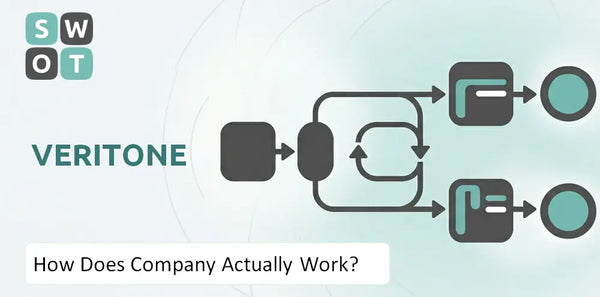
Veritone, Inc. routes raw audio, video, and sensor feeds into an orchestration layer that selects and runs best-fit AI engines, then returns indexed, searchable outputs. In 2025 it emphasized software-first revenue and reported growing AI training-data contracts as a strategic signal.
Veritone, Inc. monetizes via SaaS subscriptions, per-minute processing fees, and data-labeling contracts, driving recurring revenue and high-margin services. See one product analysis: Veritone SWOT Analysis
What Does Veritone Actually Sell?
Veritone, Inc. sells the aiWARE AI operating system and the Veritone Data Refinery (VDR), plus industry apps like iDEMS; together they convert unstructured audio, video, and text into searchable, tokenized, AI-ready assets and deliver actionable, time – stamped intelligence for media, legal, and public safety workflows.
 Core aiWARE platform and VDR
Veritone offers the aiWARE platform that orchestrates over 850 AI models to run tasks such as transcription, facial recognition, and sentiment analysis, plus the Veritone Data Refinery for tokenizing unstructured data into machine – readable units for model training.
Who it serves
Veritone serves broadcasters, advertisers, legal and eDiscovery teams, public safety agencies, and enterprises needing media analytics, digital evidence management, and AI – ready datasets for model fine – tuning.
Value delivered
Customers gain searchable, time – stamped structured intelligence from raw media, scalable AI – ready datasets via VDR, and turnkey industry applications (e.g., iDEMS) that cut search and review time and improve evidentiary reliability.
Why customers choose Veritone
Clients pick Veritone for the aiWARE platform's multi – engine flexibility (pick best model per task), VDR's data tokenization for model training, and industry apps tailored to media, advertising, and public safety that integrate with cloud services and APIs.
Veritone reported fiscal 2025 product and service revenue growth tied to aiWARE deployments and VDR licensing; for specific 2025 figures consult the company filings and the article History of Veritone Company Explained for detailed historical context and implementation case studies.
Veritone SWOT Analysis
- Complete SWOT Breakdown
- Fully Customizable
- Editable in Excel & Word
- Professional Formatting
- Investor-Ready Format

How Does Veritone Run Day to Day?
Veritone runs day to day as an ingestion and orchestration pipeline that converts unstructured audio and video into indexed, searchable data using its aiWARE platform and multiple AI engines.

Operating model: ingestion to orchestration
Veritone ingests disparate unstructured sources-police body-cam footage, broadcast archives, podcasts-and normalizes formats. The aiWARE orchestration layer runs parallel AI engines and outputs structured metadata, tokens, and timecode-aligned transcripts.
Product delivery: cloud-agnostic access
Customers access Veritone platform capabilities via cloud-hosted SaaS, FedRAMP-authorized deployments, or self-hosted private tenants on AWS, Azure, and Oracle Cloud Infrastructure. APIs and web consoles deliver indexed results, visualizations, and exports.
Development: model selection and evaluation
Engineering maintains a catalog of third-party and proprietary AI engines; model selection is automated by accuracy and cost rules. Continuous testing refines speech-to-text, face and object detection, and NLP models for specific Veritone use cases.
Sales channels: enterprise and vertical partners
Veritone sells via direct enterprise sales, channel partners for broadcasters and legal firms, and marketplace integrations. Usage-based pricing and subscription plans let media, advertising, and eDiscovery customers scale consumption.
Key assets: aiWARE, security, and partnerships
Core assets are the aiWARE platform, FedRAMP authorization, multi-cloud deployment options, and partnerships with cloud providers and AI vendors. These support over 3,500 customers and regulated deployments.
Practical enabler: parallel engine orchestration
Running multiple AI engines in parallel and choosing models by accuracy or cost keeps processing fast and cost-effective. That orchestration is the single most important factor making Veritone scale across media, legal, and public-sector clients.

Daily operations: ingestion, AI processing, and secure delivery
Veritone operates daily by ingesting unstructured media, running aiWARE to apply parallel AI engines, and delivering structured outputs through cloud-agnostic and on-prem options that meet stringent privacy standards.
- Core operating model: ingestion and orchestration pipeline converting media to indexed metadata
- Product delivery: SaaS, FedRAMP cloud, and self-hosted tenants on AWS, Azure, OCI
- Main support: aiWARE platform, cloud partnerships, and third-party AI engine integrations
- Efficiency driver: automated parallel model selection balancing accuracy and cost
See additional company context in this article: Who Owns Veritone Company
Veritone PESTLE Analysis
- Covers All 6 PESTLE Categories
- No Research Needed – Save Hours of Work
- Built by Experts, Trusted by Consultants
- Instant Download, Ready to Use
- 100% Editable, Fully Customizable

How Does Money Come In at Veritone?
Veritone, Inc. converts demand into revenue primarily through its Veritone platform software, with recurring SaaS and usage fees, plus managed advertising services and bespoke professional work. The model is shifting toward recurring software streams that tie fees to data volume and cognitive engines used.
Main revenue from AI software subscriptions
Most 2025 revenue comes from Veritone AI software: tiered SaaS and usage-based charges for the aiWARE platform, covering transcription, indexing, and cognitive engine deployments, and accounting for about 60 percent of 2025 revenue.
Managed services and advertising
Managed services, led by an AI-driven advertising arm, contribute roughly 35 percent of revenue via agency fees and commissions on media spend, integrating Veritone solutions for broadcasters, publishers, and advertisers.
Pricing and monetization mechanics
Veritone uses mixed pricing: subscriptions for platform access, per-minute or per-token usage fees (for transcription and data refinement), and commission-based billing for media spend; bundles and tiered plans target enterprise scale and recurring revenue.
Primary revenue drivers
The biggest drivers are customer scale and platform activity: higher data ingestion, more cognitive engines deployed, and growth in advertising media spend; software mix and recurring subscriptions increase predictability and margin over time.
How Veritone Turns Usage into Revenue
Veritone converts platform usage into predictable recurring revenue through subscriptions and usage fees, supplements that with managed advertising commissions, and captures bespoke projects via professional services.
- Software subscriptions and usage fees drive the bulk of revenue (about 60 percent in 2025)
- Managed services and ad agency revenue provide significant recurring and variable income (about 35 percent)
- Pricing mixes subscriptions, per-minute/per-token usage, and media commissions
- Scale of data ingestion and cognitive engine deployment is the strongest revenue driver
Financial context: software revenue rose 55.5 percent in Q3 2025, and full-year 2026 revenue was projected at USD 130 million to 145 million, reflecting the shift toward recurring Veritone platform income; for competitive context see Who Veritone Company Competes With.
Veritone SOAR Analysis
- Complete SOAR Analysis
- Effortlessly Communicate Your Business Strategy
- Investor-Ready Format
- 100% Editable and Customizable
- Clear and Structured Layout

What Makes Veritone's Model Strong or Fragile?
Veritone, Inc. gains strength from neutral orchestration and deep public-sector ties, yet faces fragility from financial volatility and hyperscaler competition. Key strengths: model-agnostic flexibility and DoD/USAF integration; key risks: GAAP losses, reliance on VDR tokenization scale, and cloud provider encroachment.
Orchestration, not foundational model ownership
Veritone operates as a neutral orchestrator that integrates multiple AI models rather than training foundational LLMs, lowering R&D capital intensity and enabling rapid substitution of superior models as they appear.
Vertical focus and public-sector moats
The company's Awardable status with the Department of Defense and a sole-source U.S. Air Force contract create a high-barrier-to-entry channel for recurring, mission-critical deployments that competitors find hard to replicate quickly.
Dependencies on tokenization and recurring ARR
Veritone's economics hinge on scaling VDR tokenization-22.2 trillion tokens processed in H2 2025-and converting a public-sector pipeline into high-margin annual recurring revenue (ARR) to sustain margins.
Financial health and profitability path
The company returned to positive operating cash flow in early 2025 and reduced debt by 77.5 million USD in 2025, but remains GAAP unprofitable with projected non-GAAP losses of 13.5 million to 22.5 million USD for 2026.
Why the model works and what could break it
Veritone's neutral, vertical orchestration and public-sector foothold enable differentiated, sticky deployments, but survival depends on scaling tokenization economics and resisting hyperscaler platform encroachment.
- Neutral orchestration reduces R&D spend and increases adaptability
- DoD Awardable status and a sole-source U.S. Air Force contract form a defensible sales channel
- Revenue and margin sensitivity to VDR tokenization scale and ARR conversion
- Model is exposed in 2025/2026: operationally improving but financially fragile versus Google/AWS competition
See additional context in What Veritone Company Stands For for background on strategy and positioning related to Veritone AI and the Veritone platform.
Veritone VRIO Analysis
- Covers VRIO Analysis in Details
- Structured for Consultants, Students, and Founders
- 100% Editable in Microsoft Word & Excel
- Instant Digital Download – Use Immediately
- Compatible with Mac & PC – Fully Unlocked

Related Blogs
- What Does Veritone Company Stand For?
- How Did Veritone Company Become What It Is Today?
- Who Owns Veritone Company and Why Does It Matter?
- How Does Veritone Company Sell Its Products and Services?
- Where Is Veritone Company Going Next?
- Who Does Veritone Company Serve?
- Who Does Veritone Company Compete With?
Frequently Asked Questions
Veritone sells the aiWARE AI operating system, the Veritone Data Refinery (VDR), and industry apps like iDEMS. These tools turn unstructured audio, video, and text into searchable, tokenized, AI-ready assets and deliver time-stamped intelligence for media, legal, and public safety workflows.
Disclaimer
All information, articles, and product details provided on this website are for general informational and educational purposes only. We do not claim any ownership over, nor do we intend to infringe upon, any trademarks, copyrights, logos, brand names, or other intellectual property mentioned or depicted on this site. Such intellectual property remains the property of its respective owners, and any references here are made solely for identification or informational purposes, without implying any affiliation, endorsement, or partnership.
We make no representations or warranties, express or implied, regarding the accuracy, completeness, or suitability of any content or products presented. Nothing on this website should be construed as legal, tax, investment, financial, medical, or other professional advice. In addition, no part of this site - including articles or product references - constitutes a solicitation, recommendation, endorsement, advertisement, or offer to buy or sell any securities, franchises, or other financial instruments, particularly in jurisdictions where such activity would be unlawful.
All content is of a general nature and may not address the specific circumstances of any individual or entity. It is not a substitute for professional advice or services. Any actions you take based on the information provided here are strictly at your own risk. You accept full responsibility for any decisions or outcomes arising from your use of this website and agree to release us from any liability in connection with your use of, or reliance upon, the content or products found herein.