
How does Trustmark Corporation turn local deposits into profitable loans and fees?
Trustmark Corporation earns from net interest margin on loans and fee income from wealth management and payment services. In 2025 it reported loan growth in Texas and a stabilized net interest margin after rate shifts, signaling scalable regional banking execution.
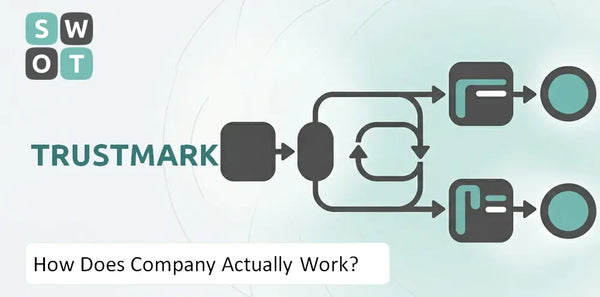
Trustmark leans on relationship banking and regional branches to convert deposits into higher-yield commercial and consumer loans while cross-selling wealth services; this mix supports recurring fee revenue and limits deposit beta.
See product detail: Trustmark SWOT Analysis
What Does Trustmark Actually Sell?
Trustmark Corporation sells financial stability through lending, capital access via deposit and treasury services, and wealth preservation via fiduciary and investment management; customers get an integrated financial platform for business and personal needs.
 Core Financial Products
Trustmark Corporation's primary product is loans: commercial real estate, commercial and industrial, and consumer lending, forming the backbone of its $13.7 billion loan portfolio at year-end 2025. It also sells deposit accounts, treasury services, and payment solutions to support liquidity and operations.
Wealth and Fiduciary Services
Through its wealth management arm, Trustmark provides trust administration, investment management, and retirement planning to high-net-worth individuals and institutions, plus institutional custody and fiduciary oversight for estates and endowments.
Who It Serves
Trustmark serves small-to-midsize businesses, commercial real estate developers, professionals, retail consumers, and high-net-worth clients primarily across the southeastern United States and Texas. Corporate clients use commercial loans and treasury, while individuals use private banking and trust services.
Value It Delivers
Customers gain single-source access to credit, deposit liquidity, and wealth preservation under one institution, reducing friction for business owners who need a commercial loan, corporate deposits, and personal estate planning simultaneously. That integrated model supports capital access and continuity.
Why Customers Choose It
Clients choose Trustmark for regional scale, established credit underwriting, and combined banking-plus-fiduciary capabilities that are harder to replicate by standalone trust firms or fintechs. Its track record in commercial lending and a $13.7 billion loan book signal capacity and experience.
How This Maps to Trustmark-style Certifications
While Trustmark Corporation is not a trustmark seal provider in the website-verification sense, understanding trustmark certification concepts helps customers evaluate credibility: look for accreditation steps, verification processes, and service standards when comparing banking, trust, or third-party trustmark vendors; see further context in Who Owns Trustmark Company.
Trustmark SWOT Analysis
- Complete SWOT Breakdown
- Fully Customizable
- Editable in Excel & Word
- Professional Formatting
- Investor-Ready Format

How Does Trustmark Run Day to Day?
Trustmark Company runs day-to-day by combining a physical branch network with digital channels to originate loans and gather deposits, while actively managing a $18.9 billion balance sheet and daily asset – liability and credit risk metrics.

Branch-plus-digital operating model
Trustmark Company operates 167 banking centers that act as primary acquisition points for deposits and loans, supplemented by online and mobile platforms to serve retail and commercial customers across markets.
Product and service delivery
Customers access deposit accounts, consumer and commercial loans, and treasury services through branches, online banking, and relationship teams; digital onboarding accelerates conversions and reduces branch foot traffic.
Loan origination and funding
Loan production cycles combine local credit teams with centralized underwriting; deposits from branches and digital channels fund lending and securities portfolios as part of daily funding operations.
Sales channels and distribution
Primary channels include the 167 banking centers, commercial relationship managers, digital platforms, and referral partnerships; branches remain key for relationship acquisition in target metros like Houston and North Texas.
Key assets, systems, and partnerships
Critical infrastructure includes core banking systems, loan servicing platforms, treasury management tech, and partner pipelines; these support scale and compliance across an $18.9 billion balance sheet.
What makes the model work in practice
Daily focus on asset – liability management (keep funding cost below loan yields), active credit oversight, and targeted metro expansion (Houston, North Texas) drives efficient growth and margin preservation.

Daily mechanics: balancing growth, funding, and credit
Day to day, Trustmark Company runs by originating loans and collecting deposits across 167 branches and digital channels, managing liquidity and credit risk on a $18.9 billion balance sheet while keeping an ACL at 1.15 percent of loans held for investment as of December 31, 2025; strategic expansion prioritizes Houston and North Texas to capture business formation.
- Core operating model: branch network plus digital origination supporting deposit-funded lending
- Service delivery: branches, relationship teams, and online/mobile platforms for account opening and loan closing
- Main support systems: core banking, loan servicing, treasury tech, and partnership channels
- Efficiency driver: strict asset – liability management and daily credit monitoring with an ACL at 1.15 percent
Related reading: What Trustmark Company Stands For
Trustmark PESTLE Analysis
- Covers All 6 PESTLE Categories
- No Research Needed – Save Hours of Work
- Built by Experts, Trusted by Consultants
- Instant Download, Ready to Use
- 100% Editable, Fully Customizable

How Does Money Come In at Trustmark?
Trustmark Corporation earns most revenue from net interest income-lending and investing at higher rates than it pays on deposits-and supplements that with fee income from wealth management and mortgage banking.
Net Interest Income: Core Earnings Engine
Net interest income drove Trustmark Company in 2025, producing $647.2 million of total net interest income (FTE) as the bank captured the spread between loan/securities yields and deposit funding costs.
Fee Income and Non-Interest Revenue
Non-interest income totaled $163.6 million in 2025, with wealth management fees rising 7.7 percent to $40.1 million and mortgage banking revenue up 24.2 percent to $33.1 million, reducing reliance on Fed rate moves.
Pricing and Monetization Model
Interest margin pricing (loan rates minus deposit rates) is the primary monetization; fees come from asset-based wealth management charges, mortgage origination/servicing fees, and transactional fees.
Primary Revenue Drivers
The most important driver is net interest margin-3.80 percent in 2025-coupled with loan and securities volume; fee mix and mortgage origination growth act as volatility dampeners.
How Money Comes In at Trustmark Company
Trustmark converts customer deposits and capital into interest-bearing loans and securities to earn a net interest margin, while fees from wealth management and mortgage banking diversify revenue.
- Net interest income: $647.2 million in 2025; main revenue source
- Non-interest income: $163.6 million in 2025, led by wealth management and mortgage banking
- Monetization: interest spread plus fee schedules, origination and asset-based fees
- Top driver: net interest margin of 3.80 percent and loan/securities volume
See operational context and market segments in this article on Who Trustmark Company Serves Who Trustmark Company Serves.
Trustmark SOAR Analysis
- Complete SOAR Analysis
- Effortlessly Communicate Your Business Strategy
- Investor-Ready Format
- 100% Editable and Customizable
- Clear and Structured Layout

What Makes Trustmark's Model Strong or Fragile?
The Trustmark Company model is strong due to disciplined capital and diversified revenue, yet fragile from regional concentration and interest-rate sensitivity; key strengths are low-cost deposits and a shift to fee-heavy revenue, while vulnerabilities include Southeast/Texas economic cycles and fintech-driven customer-acquisition pressure.
Capital and Revenue Discipline Support Stability
Trustmark Company reported a Common Equity Tier 1 ratio of 11.72 percent and a total risk-based capital ratio of 14.41 percent in late 2025, providing a capital buffer to absorb credit losses and fund growth while preserving trustmark certification credibility for business partners.
Low-Cost Deposits and Fee Mix Protect Margins
Non-interest-bearing deposits were 19.6 percent of total deposits at year-end 2025, supporting net interest margin (NIM); simultaneous revenue diversification toward fees and service income reduces reliance on spread income and strengthens the trustmark seal provider business line.
Regional Footprint and Customer Channels
Core deposit and lending operations are concentrated in the Southeast and Texas, where local GDP and employment trends drive credit performance; partnerships and digital channels aid website trustmark verification and customer onboarding but require continued investment.
Outlook Durability into 2026
Record 2025 earnings and a move to a fee-heavy mix make the model look durable in 2025/2026, yet outcomes hinge on interest-rate trajectories and regional economic health; if deposit costs rise faster than loan yields, margins compress quickly.
Balance of Strengths and Fragilities
Trustmark Company works because of strong capital ratios, a cheap deposit base, and strategic revenue shifts; it weakens when regional downturns hit loans or when fintechs cut customer-acquisition costs and interest-rate swings lift deposit costs faster than loan yields.
- Strong capital buffer with 11.72 percent CET1
- Low-cost deposits: 19.6 percent non-interest-bearing share
- Concentration risk in Southeast and Texas lending markets
- Resilience is conditional: robust in 2025/2026 but exposed to rate and regional shocks
For strategic context on go-to-market and revenue mix changes tied to trustmark accreditation process and trustmark benefits for businesses, see How Trustmark Company Sells
Trustmark VRIO Analysis
- Covers VRIO Analysis in Details
- Structured for Consultants, Students, and Founders
- 100% Editable in Microsoft Word & Excel
- Instant Digital Download – Use Immediately
- Compatible with Mac & PC – Fully Unlocked

Related Blogs
- What Does Trustmark Company Stand For?
- How Did Trustmark Company Become What It Is Today?
- Who Owns Trustmark Company and Why Does It Matter?
- How Does Trustmark Company Sell Its Products and Services?
- Where Is Trustmark Company Going Next?
- Who Does Trustmark Company Serve?
- Who Does Trustmark Company Compete With?
Frequently Asked Questions
Trustmark sells lending, deposit and treasury services, and wealth management. Its core products include commercial real estate, commercial and industrial, and consumer loans, plus trust administration, investment management, retirement planning, and fiduciary oversight for estates and endowments.
Disclaimer
All information, articles, and product details provided on this website are for general informational and educational purposes only. We do not claim any ownership over, nor do we intend to infringe upon, any trademarks, copyrights, logos, brand names, or other intellectual property mentioned or depicted on this site. Such intellectual property remains the property of its respective owners, and any references here are made solely for identification or informational purposes, without implying any affiliation, endorsement, or partnership.
We make no representations or warranties, express or implied, regarding the accuracy, completeness, or suitability of any content or products presented. Nothing on this website should be construed as legal, tax, investment, financial, medical, or other professional advice. In addition, no part of this site - including articles or product references - constitutes a solicitation, recommendation, endorsement, advertisement, or offer to buy or sell any securities, franchises, or other financial instruments, particularly in jurisdictions where such activity would be unlawful.
All content is of a general nature and may not address the specific circumstances of any individual or entity. It is not a substitute for professional advice or services. Any actions you take based on the information provided here are strictly at your own risk. You accept full responsibility for any decisions or outcomes arising from your use of this website and agree to release us from any liability in connection with your use of, or reliance upon, the content or products found herein.