
How does TerraVest Industries Inc. buy, integrate, and grow niche industrial manufacturers into a cash-generating platform?
TerraVest Industries Inc. consolidates niche manufacturers, cuts costs, and scales sales through shared services and cross-selling, turning slow-growth products into faster revenue via acquisitions. In 2025 it reported CAD 620 million revenue and rising margins, signaling operational leverage.
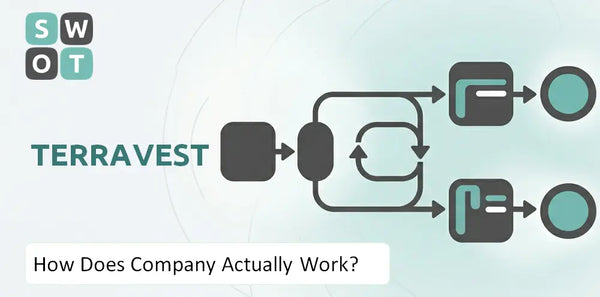
TerraVest monetizes repeatable fabrication work and aftermarket services; acquisitions add immediate EBITDA while centralized ops lower SG&A, supporting the dividend and reinvestment cycle. See TerraVest SWOT Analysis
What Does TerraVest Actually Sell?
TerraVest Industries sells engineered storage and processing equipment and industrial services across HVAC and Cooling, Compressed Gas Equipment, Energy Processing Equipment, and industrial Services, delivering compliant, high-spec infrastructure that meets strict safety codes and standards.
 Primary product lines and platforms
TerraVest Industries manufactures HVAC and specialized cooling tanks, LPG/NGL/ammonia storage and transport equipment, well-site and central processing skids, plus water management and well-servicing services. These are engineered, code-compliant assets sold to energy, industrial, and commercial customers.
Who it serves
Customers include oil and gas operators, petrochemical plants, utilities, data-center developers, and industrial contractors. Sales target end-users needing certified storage, transport, processing, or water and well services compliant with federal and provincial regulations.
Value delivered
Buyers get certified, safety-compliant equipment that reduces regulatory risk and downtime, shortens permitting cycles, and lowers lifecycle costs through engineered fit-for-service solutions. In 2025, HVAC and Cooling organic growth ran at 14 percent driven by data-center cooling tank demand.
Why customers choose TerraVest Industries
Customers pick TerraVest Industries for regulatory-grade engineering, long-standing manufacturing controls, and a broad product portfolio that creates high barriers to entry. The TerraVest business model bundles manufacturing with localized services, aiding integration across TerraVest Companies and portfolio companies.
See related corporate perspective in What TerraVest Company Stands For
TerraVest SWOT Analysis
- Complete SWOT Breakdown
- Fully Customizable
- Editable in Excel & Word
- Professional Formatting
- Investor-Ready Format

How Does TerraVest Run Day to Day?
TerraVest Industries Inc. runs day-to-day as a roll-up operator: acquire niche manufacturers, centralize back-office functions, and drive margin gains through scale and cross-selling across its portfolio companies such as EnTrans, Tankcon, and Highland Tank.

Disciplined acquire, optimize, synergize operating model
TerraVest Companies sources bolt-on targets, closes acquisitions at low multiples from retiring owners, and runs each unit as an independent brand under centralized corporate oversight.
Product and service delivery through branded units
Each TerraVest portfolio company retains direct customer-facing sales and service teams so products-tanks, fuel systems, and test equipment-reach industrial and energy customers via existing dealer networks and OEM contracts.
Centralized production sourcing and operational development
Manufacturing stays at regional plants but materials procurement, engineering standards, and quality systems are centralized to lower COGS and speed production improvements across subsidiaries.
Sales channels: direct, distributors, and project OEMs
TerraVest Industries sells through direct field reps, distributor networks, and project-based OEM contracts; recent moves expand into electrical test systems (Simplex) and fiberglass storage (KBK Industries) to reduce energy cyclicality.
Key assets: manufacturing footprint and centralized systems
Key assets include regional fabrication plants, inventory pools, ERP procurement systems, and a small M&A-focused corporate team that sources, diligences, and integrates acquisitions.
Why the model scales in practice
The model works because TerraVest Industries standardizes purchasing and overhead, then improves target margins quickly-management reports acquisition payback often in the low single-digit years after integration.

Operational snapshot: How TerraVest Companies runs daily
Day-to-day operations focus on running independent manufacturing brands while central teams chase procurement savings, facility rationalization, and cross-sell opportunities; 2025 acquisitions Simplex and KBK Industries illustrate the strategy to diversify revenue away from cyclic energy markets.
- Core operating model: roll-up strategy of bolt-on acquisitions, centralized overhead, decentralized sales.
- Product delivery: branded units service customers via direct sales, distributors, and OEM project contracts.
- Main supporting system: centralized ERP/procurement, regional manufacturing network, and an M&A integration team.
- Efficiency driver: standardized purchasing, facility consolidation, and rapid margin-improvement playbook.
For a corporate-ownership overview and context on recent deal activity see Who Owns TerraVest Company
TerraVest PESTLE Analysis
- Covers All 6 PESTLE Categories
- No Research Needed – Save Hours of Work
- Built by Experts, Trusted by Consultants
- Instant Download, Ready to Use
- 100% Editable, Fully Customizable

How Does Money Come In at TerraVest?
Revenue at TerraVest Industries flows through two channels: large CAPEX equipment sales and higher-margin OPEX services. The business captures big, one-time payments from new equipment while building recurring aftermarket and service income.
Main revenue from equipment sales
TerraVest Industries earns the majority of cash by selling new industrial equipment-pressure vessels, transport vehicles and modular units-to energy and industrial customers, producing large upfront CAPEX payments tied to project cycles.
Recurring revenue from aftermarket services
Aftermarket parts, equipment refurbishment, field services and long-term maintenance contracts deliver higher margins and predictable OPEX-style revenue that reduces sales volatility and raises lifetime customer value.
Pricing and monetization mix
Pricing is primarily one-time CAPEX for bespoke equipment plus fee schedules for parts and service agreements; some contracts use time-and-materials or fixed-price maintenance retainers to lock recurring cash flow.
Primary revenue driver
Volume and project timing drive revenue most: large industrial expansion or restart cycles boost CAPEX sales, while installed base growth and cross-selling to TerraVest portfolio companies amplify recurring service margins.
How TerraVest Industries turns demand into cash
TerraVest Companies converts project demand into large upfront equipment sales and then monetizes the installed base through aftermarket and service contracts, creating a balanced CAPEX/OPEX revenue model.
- Major stream: new equipment CAPEX sales generating sizable one-time payments
- Secondary stream: higher-margin aftermarket parts, refurbishment, and service contracts
- Monetization: one-time sales plus recurring fee-based and retainer service models
- Strongest driver: project volume and installed-base penetration increasing repeat revenue
Financials illustrate scale: TerraVest Industries reported FY 2025 sales of CAD 1.37 billion, up 50 percent year-over-year, and achieved an Adjusted EBITDA of CAD 264.6 million; Q1 FY 2026 sales rose 74 percent year-over-year to CAD 408.4 million. For context on corporate history and acquisitions informing this model, see History of TerraVest Company Explained.
TerraVest SOAR Analysis
- Complete SOAR Analysis
- Effortlessly Communicate Your Business Strategy
- Investor-Ready Format
- 100% Editable and Customizable
- Clear and Structured Layout

What Makes TerraVest's Model Strong or Fragile?
TerraVest Industries' model is strong for its disciplined roll-up strategy and top-three positions across niche industrial segments, but fragile because organic growth averaged only 2% over the past three years and the firm relies heavily on continuous acquisitions and elevated leverage.
Scale and Roll-up Advantage
TerraVest Companies gains margin and pricing power by consolidating fragmented industrial niches; operating as a top-three player in multiple segments reduces single-market exposure and increases bargaining leverage with suppliers and customers.
Proven Acquisition Engine
TerraVest Industries deploys capital into tuck-ins and platform buyouts, often lowering deal multiples through restructuring and synergies, which has driven its historical revenue and EBITDA growth via acquisitions rather than organic expansion.
Acquisition and Integration Dependency
The model depends on a steady pipeline of deals and successful integration; with organic revenue growth at 2% (three – year average), failure to source or integrate acquisitions quickly would materially slow top-line expansion.
Balance Sheet Leverage
As of early 2026 total debt stood near 927,200,000 to 990,000,000 dollars, reflecting aggressive deal activity; high leverage raises refinancing, covenant, and interest-rate sensitivities for TerraVest Industries.
Net Assessment of Structural Strengths and Fragilities
TerraVest business model works because its roll-up strategy captures scale and margin improvement, but it is exposed if acquisition flow or integration execution falters or if leverage costs rise materially.
- Top structural strength: consolidation of fragmented industrial niches drives pricing and margin gains
- Key asset: a repeatable TerraVest acquisitions strategy and experienced TerraVest management team
- Primary dependency: continuous deal flow and fast, low-cost integration of TerraVest portfolio companies
- Durability: exposed - high-performance compounder in 2025/2026 but vulnerable to overleveraging and weak organic growth
For mechanics on how deals are sold and commercial channels used across its subsidiaries, see How TerraVest Company Sells
TerraVest VRIO Analysis
- Covers VRIO Analysis in Details
- Structured for Consultants, Students, and Founders
- 100% Editable in Microsoft Word & Excel
- Instant Digital Download – Use Immediately
- Compatible with Mac & PC – Fully Unlocked

Related Blogs
- What Does TerraVest Company Stand For?
- How Did TerraVest Company Become What It Is Today?
- Who Owns TerraVest Company and Why Does It Matter?
- How Does TerraVest Company Sell Its Products and Services?
- Where Is TerraVest Company Going Next?
- Who Does TerraVest Company Serve?
- Who Does TerraVest Company Compete With?
Frequently Asked Questions
TerraVest sells engineered storage and processing equipment plus industrial services. Its main offerings include HVAC and cooling tanks, LPG/NGL/ammonia storage and transport equipment, well-site and central processing skids, and water management and well-servicing services for energy, industrial, and commercial customers.
Disclaimer
All information, articles, and product details provided on this website are for general informational and educational purposes only. We do not claim any ownership over, nor do we intend to infringe upon, any trademarks, copyrights, logos, brand names, or other intellectual property mentioned or depicted on this site. Such intellectual property remains the property of its respective owners, and any references here are made solely for identification or informational purposes, without implying any affiliation, endorsement, or partnership.
We make no representations or warranties, express or implied, regarding the accuracy, completeness, or suitability of any content or products presented. Nothing on this website should be construed as legal, tax, investment, financial, medical, or other professional advice. In addition, no part of this site - including articles or product references - constitutes a solicitation, recommendation, endorsement, advertisement, or offer to buy or sell any securities, franchises, or other financial instruments, particularly in jurisdictions where such activity would be unlawful.
All content is of a general nature and may not address the specific circumstances of any individual or entity. It is not a substitute for professional advice or services. Any actions you take based on the information provided here are strictly at your own risk. You accept full responsibility for any decisions or outcomes arising from your use of this website and agree to release us from any liability in connection with your use of, or reliance upon, the content or products found herein.