
How does Smart Share Global monetize on-demand mobile power through station placement and partner integrations?
Smart Share Global rents portable power via dense urban kiosks and B2B partnerships, turning battery swaps into recurring microtransactions. In 2025 it reported robust unit deployments and rising per-station transactions, signaling scalable ops and improving margins.
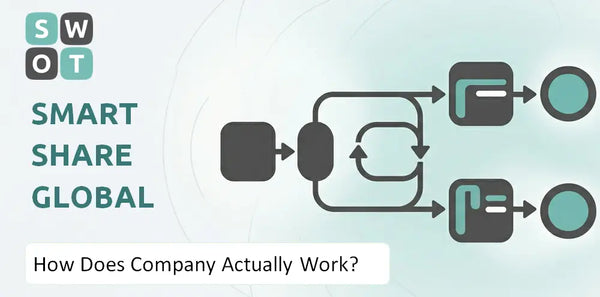
Its revenue mixes pay-per-use, subscriptions, and ad placements at kiosks; careful station uptime keeps cash flow steady and lowers churn risk. See Smart Share Global SWOT Analysis for product-level detail.
What Does Smart Share Global Actually Sell?
Smart Share Global sells on-demand access to portable power through its Energy Monster brand via a distributed kiosk rental network, giving users temporary mobile batteries they pick up and return across stations to remove charging anxiety.
 Core product: rentable portable power
The offering is a networked rental service of portable batteries (Energy Monster) accessed through kiosks and a supporting app or QR interface. Rather than selling hardware to individuals, Smart Share Global monetizes short-term rentals and station placement fees across retail, transit, and leisure locations.
Who it serves: high-footfall venues and mobile users
The service targets venues-restaurants, malls, airports, transit hubs-that want added foot traffic and ancillary revenue, plus on-the-go consumers needing immediate power. See customer segments and placement logic in this piece: Who Smart Share Global Company Serves
Value delivered: convenience and reduced churn
Customers get immediate, untethered power without owning chargers, cutting average device downtime and eliminating charging anxiety; venues gain incremental revenue per kiosk and longer customer dwell times. In trials and deployments through 2025, reported kiosk utilization rates range from 18% to 34% daily, and Average Revenue Per User per rental session is often $2-$4.
Why customers choose it: convenience, ubiquity, and flexibility
Users prefer the pick-up/return flexibility across stations and simple pay-per-use pricing, avoiding upfront hardware costs. Venues choose kiosk partnerships for low installation complexity and shared revenue; operators cite faster ROI-often within 12-18 months-versus in-store promotions or standalone vending equipment.
Smart Share Global SWOT Analysis
- Complete SWOT Breakdown
- Fully Customizable
- Editable in Excel & Word
- Professional Formatting
- Investor-Ready Format

How Does Smart Share Global Run Day to Day?
Smart Share Global runs daily by operating and maintaining a vast physical rental network of power banks and kiosks, staffed through a partner network that handles site operations, replenishment, and minor repairs; customers rent via QR-code scan and mobile payment. The operating model shifted from fully direct control to a network partner model to cut overhead and speed rollout.

Network-driven Operating Model
Day-to-day operations rely on a partner network that manages locations and routine servicing while central teams handle device firmware, analytics, and partner onboarding. As of December 31, 2024, Smart Share Global managed 9.6 million power banks across 1,279,900 points of interest in over 2,200 counties and county-level districts in China.
Product and Service Delivery to Users
Customers access power banks by scanning a QR code on a cabinet and paying through integrated mobile payment systems; returns and status updates are tracked in real time via device telemetry. The user flow is fully digital, supporting rapid rentals and low-touch transactions.
Hardware Sourcing and Maintenance
Smart Share Global sources standardized power bank units and charging kiosks from contract manufacturers and maintains them via scheduled swaps and on-demand partner repairs. Centralized firmware updates and remote diagnostics reduce failure rates and service visits.
Sales Channels and Distribution
Distribution uses retail, hospitality, transit hubs, and third-party partner placements; partners earn revenue share or rental fees per POI. This channel mix enables rapid geographic coverage and localized placement decisions by partners.
Key Assets, Systems, and Partnerships
Key assets include the hardware fleet, cloud telemetry, mobile payment integrations, and partner agreements. Strategic partnerships with high-footfall venue operators and payment platforms underpin daily replenishment and monetization.
Practical Driver of Operational Efficiency
The partner-operated POI network scales faster and lowers capex burden; combined with telemetry-enabled preventive maintenance, it keeps uptime high and logistics costs controlled. Real-time data steers placement and inventory rotation.

How Smart Share Global Runs Day to Day
Smart Share Global runs daily on partner-managed locations, cloud-controlled hardware telemetry, and a fully digital customer rental flow; maintenance, replenishment, and revenue collection are executed by local partners under centralized operational oversight.
- Core operating model: partner network managing POIs with central platform control
- Product delivery: QR-code release and mobile payment for instant rental
- Main support: cloud telemetry, payment integrations, venue partnerships
- Efficiency driver: scale via partner placements plus preventive maintenance
Who Smart Share Global Company Competes With
Smart Share Global PESTLE Analysis
- Covers All 6 PESTLE Categories
- No Research Needed – Save Hours of Work
- Built by Experts, Trusted by Consultants
- Instant Download, Ready to Use
- 100% Editable, Fully Customizable

How Does Money Come In at Smart Share Global?
Smart Share Global generates cash mainly from two lines: mobile device charging rentals and photovoltaic (PV) engineering services. Users pay by usage for power banks, while PV customers pay for EPC projects and installations.
Mobile device charging rentals: the core revenue engine
Mobile Device Charging services produced CN¥1.41 billion in 2024 by charging rental fees tied to duration of power bank use, making it the dominant part of Smart Share Global's business model.
Photovoltaic (PV) EPC services as a secondary stream
The PV Business contributed CN¥479.85 million in 2024 through engineering, procurement, and construction for household rooftop solar stations, providing higher-ticket, project-based revenue.
Pricing and monetization: usage plus project fees
Smart Share Global monetizes charging as usage-based rentals (time-based fees) and PV via one-off EPC contracts and installation fees, with occasional service or maintenance add-ons.
What drives revenue most
Scale of charging network and usage frequency drive the bulk of sales; PV project volume and average contract size determine the rest of top-line performance.
How money comes in at Smart Share Global
Smart Share Global turns device demand into cash mainly through time-based power bank rentals and secondarily through PV EPC project sales; combined revenue was about CN¥1.89 billion in 2024 while net loss stood at CN¥13.53 million.
- Mobile Device Charging rentals: CN¥1.41 billion
- Photovoltaic EPC projects: CN¥479.85 million
- Pricing model: usage-based fees for rentals plus one-time EPC contract payments
- Strongest driver: charging network scale and repeat usage frequency
For deeper distribution and sales mechanics, see How Smart Share Global Company Sells
Smart Share Global SOAR Analysis
- Complete SOAR Analysis
- Effortlessly Communicate Your Business Strategy
- Investor-Ready Format
- 100% Editable and Customizable
- Clear and Structured Layout

What Makes Smart Share Global's Model Strong or Fragile?
Smart Share Global's model is strong from scale and network effects but fragile due to thin margins, rapid hardware depreciation, and intense competition; the firm's 1.2 million POIs and partner-first shift drive reach, while 2025 net losses and the December 31, 2025 shareholder vote to go private highlight structural stress.
Scale and Network Effects Support the Model
Smart Share Global's over 1.2 million POIs creates a wide accessibility moat that makes How Smart Share Global works durable at the user level; network partners add distribution without heavy capex, letting the SmartShare Global business model prioritize volume growth.
Key Assets and Operational Capabilities
The company's asset base includes widespread rental units and emerging PV energy installations; operational systems for partner onboarding and logistics scale unit deployment, while partnerships reduce need for direct retail footprint expansion.
Dependencies, Risks, and Constraints
The model depends on high utilization to cover narrow rental margins, stable partner relationships, and continual hardware replacement as devices depreciate quickly; competition from large platforms such as Meituan squeezes price and placement, and regulatory or country-specific legal status can constrain expansion.
Durability Assessment for 2025-2026
As of fiscal 2025 the model is exposed: Smart Share Global remained a volume leader in 2026 but reported net losses in 2025 and chose to go private on December 31, 2025, removing public-market pressure; long-term durability requires improving rental unit economics and scaling the PV energy vertical to diversify revenue.
Why the Model Works and What Could Break It
The clearest advantage is scale and network effects from 1.2 million POIs; the clearest weakness is narrow margins plus rapid hardware depreciation and strong competition, evidenced by 2025 net losses and the December 31, 2025 privatization decision.
- Broad accessibility via a 1.2M POI network
- Partner distribution and logistics systems that lower capex needs
- High dependence on utilization rates and rapid hardware replacement
- Model looks exposed in 2025-2026 unless rental unit economics and PV revenue scale
For more context on company purpose and positioning, see What Smart Share Global Company Stands For
Smart Share Global VRIO Analysis
- Covers VRIO Analysis in Details
- Structured for Consultants, Students, and Founders
- 100% Editable in Microsoft Word & Excel
- Instant Digital Download – Use Immediately
- Compatible with Mac & PC – Fully Unlocked

Related Blogs
- What Does Smart Share Global Company Stand For?
- How Did Smart Share Global Company Become What It Is Today?
- Who Owns Smart Share Global Company and Why Does It Matter?
- How Does Smart Share Global Company Sell Its Products and Services?
- Where Is Smart Share Global Company Going Next?
- Who Does Smart Share Global Company Serve?
- Who Does Smart Share Global Company Compete With?
Frequently Asked Questions
Smart Share Global sells on-demand portable power through its Energy Monster brand. Users rent portable batteries from kiosks, then return them at another station, so the company monetizes short-term rentals and station placement rather than selling chargers outright.
Disclaimer
All information, articles, and product details provided on this website are for general informational and educational purposes only. We do not claim any ownership over, nor do we intend to infringe upon, any trademarks, copyrights, logos, brand names, or other intellectual property mentioned or depicted on this site. Such intellectual property remains the property of its respective owners, and any references here are made solely for identification or informational purposes, without implying any affiliation, endorsement, or partnership.
We make no representations or warranties, express or implied, regarding the accuracy, completeness, or suitability of any content or products presented. Nothing on this website should be construed as legal, tax, investment, financial, medical, or other professional advice. In addition, no part of this site - including articles or product references - constitutes a solicitation, recommendation, endorsement, advertisement, or offer to buy or sell any securities, franchises, or other financial instruments, particularly in jurisdictions where such activity would be unlawful.
All content is of a general nature and may not address the specific circumstances of any individual or entity. It is not a substitute for professional advice or services. Any actions you take based on the information provided here are strictly at your own risk. You accept full responsibility for any decisions or outcomes arising from your use of this website and agree to release us from any liability in connection with your use of, or reliance upon, the content or products found herein.