
How does Robertet Company connect farm-level botanicals to luxury fragrances while controlling quality and margins?
Robertet integrates cultivation, extraction, and formulation under its Seed to Scent model, securing traceability and premium pricing; in 2025 it reported tight raw-material sourcing and steady specialty margins, reflecting resilience amid input-cost volatility.
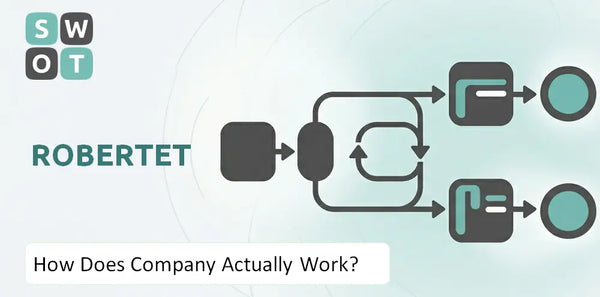
Robertet's day-to-day ties farming contracts to in-house distillation and bespoke blends, so revenue relies on specialty aromatics and long-term client partnerships; this reduces spot-market exposure and supports margin durability.
What Does Robertet Actually Sell?
Robertet sells natural aromatic solutions: essential oils, absolutes, advanced CO2 extracts, bespoke fragrance compositions, food flavors, and health/beauty actives that deliver clean-label, sustainable ingredients for global brands seeking naturality and regulatory compliance.
 Core product lines
Essential oils, absolutes, and advanced CO2 extracts form the raw-material backbone; bespoke fragrance compositions serve prestige perfumery and personal care; food-grade flavors and health/beauty active ingredients round out the portfolio.
Customer segments
Global perfume houses and luxury personal-care brands, food and beverage manufacturers, and nutraceutical/cosmetic formulators are primary clients; also ingredient distributors and private-label producers.
Value delivered
Customers get clean-label, traceable, and sustainable natural ingredients that meet tight regulatory and consumer demands; Robertet's formulations enable brand positioning in natural and prestige segments.
Why customers choose Robertet
Choices hinge on expertise in natural extraction, integrated supply chain and sourcing, R&D in perfumery, and certifications; in 2025 revenue mix led by fragrances at 37.4 percent, food flavors 34.6 percent, natural raw materials 26 percent, and health/beauty actives 2.7 percent.
For context on ownership and corporate background see Who Owns Robertet Company.
Robertet SWOT Analysis
- Complete SWOT Breakdown
- Fully Customizable
- Editable in Excel & Word
- Professional Formatting
- Investor-Ready Format

How Does Robertet Run Day to Day?
Robertet company runs day to day as a vertically integrated fragrance and natural ingredients group that sources botanicals worldwide, processes them in-house, and sells B2B to perfumers and food-and-fragrance manufacturers. Operations focus on preserving plant chemistry from origin to industrial ingredient using controlled logistics and advanced extraction methods.

Operating model: Integrated origin-to-market system
Robertet fragrance company runs a vertically integrated model: it manages sourcing at 70 distinct origins and converts raw botanicals into ingredients across 31 production sites and 17 global creation centers. Day-to-day teams coordinate growers, lab extraction, and client formulation to maintain consistent outputs.
Product delivery: B2B supply of finished natural ingredients
Products move from extraction and refinement to industrial-scale batches, then through specialized cold-chain logistics to industrial clients; sales are direct B2B with technical support from creation centers for custom formulations.
Production and sourcing: botanical-first manufacturing
Field teams source key botanicals-patchouli from Indonesia, vanilla from Madagascar-across 70 origins, then apply molecular distillation, solvent-free extraction, and biotechnological processes to preserve target chemical profiles.
Sales and distribution: creation centers to industrial clients
Robertet uses its 17 global creation centers to tailor formulas, then ships via cold-chain and standard freight to perfumers, cosmetics and flavor manufacturers. Direct sales, regional teams, and long-term contracts drive recurring B2B revenue.
Key assets and partnerships: origins, labs, and grower networks
Critical assets include 31 production sites, 17 creation centers, a network of thousands of growers, and cold-chain logistics. Partnerships include origin cooperatives in Madagascar and Indonesia and R&D links for biotech extraction methods.
Practical engine: control of the full lifecycle
Controlling sourcing, extraction, and formulation reduces quality drift and supply risk; daily operations focus on traceability, chemical fingerprinting, and logistics that minimize degradation before B2B delivery.

Day-to-day execution of Robertet operations
Operational teams coordinate grower partnerships, lab extraction, creation-center formulation, and cold-chain shipping so clients receive reproducible natural fragrance ingredients; workforce of over 2,500 employees executes these steps across global sites.
- Vertical integration across 70 origins and 31 production sites underpins the core operating model
- Products delivered as tailored B2B ingredients via 17 creation centers and specialized logistics
- Main systems: grower networks, molecular distillation and biotech extraction, and cold-chain distribution
- The model works because end-to-end control preserves plant chemical profiles and secures supply consistency
For historical context on evolution and family ownership, see History of Robertet Company Explained
Robertet PESTLE Analysis
- Covers All 6 PESTLE Categories
- No Research Needed – Save Hours of Work
- Built by Experts, Trusted by Consultants
- Instant Download, Ready to Use
- 100% Editable, Fully Customizable

How Does Money Come In at Robertet?
Revenue at Robertet company comes mainly from B2B sales of natural extracts and tailored aromatic compounds to CPG firms, niche perfumers, and nutraceutical brands. The business captures a natural premium for traceable, organic, and high – purity materials and supplements sales with technical services and custom formulations.
Main revenue: natural extracts and tailored aromatics
Robertet fragrance company earns most revenue by selling natural essential oils, absolutes, and bespoke aromatic compounds to global consumer packaged goods companies. These high-margin, repeat B2B contracts drive scale and long-term relationships with brands seeking natural fragrance ingredients Robertet.
Additional revenue: custom development and services
Secondary income comes from fragrance development fees, private – label projects, and technical support-formulation, stability testing, and regulatory documentation. These add-ons increase lifetime value per customer and support cross-sell into Robertet supply chain clients.
Pricing and monetization model
Sales are primarily one – time product shipments under supply agreements, often with volume or term discounts; development work is billed project – wise or as service retainers. The company charges a premium for certified organic, traceable, and high – purity ingredients versus synthetic substitutes.
What drives revenue most
Revenue is driven by product mix (natural premium), geographic expansion, and repeat orders from large CPG clients. In 2025, recurring demand and pricing power produced a first – half EBITDA margin of 22.5 percent and full – year revenue of 843.9 million EUR.
How money actually comes in at Robertet
Robertet turns botanical sourcing and aroma R&D into revenue by selling premium natural ingredients and tailored fragrances to global brands, backed by paid development services and regional growth. Latin America and Asia were key growth engines in 2025, boosting organic expansion and repeat sales.
- Primary revenue: B2B sales of natural extracts and bespoke aromatic compounds
- Secondary monetization: development fees, private – label projects, technical and regulatory services
- Pricing model: one – time sales with volume/term pricing plus premiums for organic/traceable materials
- Strongest driver: product mix (natural premium) and geographic expansion-Latin America grew 32.8 percent organically in 2025; Asia grew 13.3 percent in 2025
For customer segmentation and who buys what, see Who Robertet Company Serves
Robertet SOAR Analysis
- Complete SOAR Analysis
- Effortlessly Communicate Your Business Strategy
- Investor-Ready Format
- 100% Editable and Customizable
- Clear and Structured Layout

What Makes Robertet's Model Strong or Fragile?
Robertet company's model is strong because of niche dominance in natural fragrances, estimated at 7-15% of the global natural fragrance and flavor sub-sector, creating high client switching costs; it is fragile because raw-material supply depends on agriculture, exposing margins to climate shocks and currency/tariff swings.
Vertical niche control supports consistent supply
Robertet fragrance company keeps tight control over sourcing, extraction, and certification, so clients get consistent, certified sustainable natural fragrance ingredients Robertet. That verticality raises switching costs and supports long-term contracts with major perfume and food clients.
Proprietary assets and biotech investments
Robertet invests in fermentation biotech to produce rare molecules and runs specialized distillation and quality-control labs; these assets and R&D in perfumery and essential oil extraction methods provide technical defensibility and margin preservation.
Agricultural and geographic concentration
The model depends on stable harvests in Madagascar, citrus regions, and other botanical sources; climate-driven shocks like citrus greening can swing raw-material costs by 20-60%, and currency volatility plus shifting US tariffs add price risk to Robertet supply chain.
Durability outlook for 2025/2026
Judgment for 2025/2026: Strong. Robertet is mitigating fragility via biotech fermentation and rapid diversification into health products, targeting 40% of revenue from health by 2026, which reduces pure agricultural exposure.
Core reasons the model is strong or fragile
Robertet works because niche scale, vertical sourcing, and technical controls lock in clients; it is vulnerable where raw botanicals and trade policy create volatile input costs and currency risk.
- Estimated 7-15% global share in natural fragrance and flavor sub-sector as a structural strength
- Proprietary extraction labs, fermentation biotech, and R&D in perfumery as the key capability
- High dependency on agricultural yields and concentrated geographies, causing 20-60% raw-cost swings
- Model appears resilient in 2025/2026 due to biotech and health-segment diversification, but remains exposed to agrarian shocks
Further reading on market positioning and competitors: Who Robertet Company Competes With
Robertet VRIO Analysis
- Covers VRIO Analysis in Details
- Structured for Consultants, Students, and Founders
- 100% Editable in Microsoft Word & Excel
- Instant Digital Download – Use Immediately
- Compatible with Mac & PC – Fully Unlocked

Related Blogs
- What Does Robertet Company Stand For?
- How Did Robertet Company Become What It Is Today?
- Who Owns Robertet Company and Why Does It Matter?
- How Does Robertet Company Sell Its Products and Services?
- Where Is Robertet Company Going Next?
- Who Does Robertet Company Serve?
- Who Does Robertet Company Compete With?
Frequently Asked Questions
Robertet sells natural aromatic solutions for B2B customers. Its portfolio includes essential oils, absolutes, advanced CO2 extracts, bespoke fragrance compositions, food flavors, and health and beauty actives. These products are positioned for clean-label, sustainable, and regulatory-compliant use across fragrance, food, cosmetics, and nutraceutical applications.
Disclaimer
All information, articles, and product details provided on this website are for general informational and educational purposes only. We do not claim any ownership over, nor do we intend to infringe upon, any trademarks, copyrights, logos, brand names, or other intellectual property mentioned or depicted on this site. Such intellectual property remains the property of its respective owners, and any references here are made solely for identification or informational purposes, without implying any affiliation, endorsement, or partnership.
We make no representations or warranties, express or implied, regarding the accuracy, completeness, or suitability of any content or products presented. Nothing on this website should be construed as legal, tax, investment, financial, medical, or other professional advice. In addition, no part of this site - including articles or product references - constitutes a solicitation, recommendation, endorsement, advertisement, or offer to buy or sell any securities, franchises, or other financial instruments, particularly in jurisdictions where such activity would be unlawful.
All content is of a general nature and may not address the specific circumstances of any individual or entity. It is not a substitute for professional advice or services. Any actions you take based on the information provided here are strictly at your own risk. You accept full responsibility for any decisions or outcomes arising from your use of this website and agree to release us from any liability in connection with your use of, or reliance upon, the content or products found herein.