
How does Nayax convert cash vending into recurring fintech revenue through hardware, cloud, and processing?
Nayax turns unattended machines into connected revenue engines by pairing terminals, cloud telemetry, and payment processing; in 2025 it reported accelerating subscription bookings and growing transaction volumes, signaling shift to recurring fintech fees.
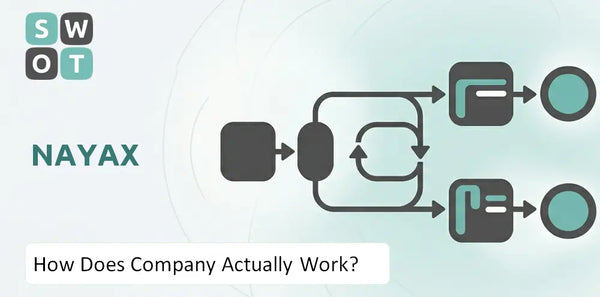
Nayax's loop monetizes devices via hardware sales plus recurring telemetry and processing fees; operators see higher transaction velocity and predictable ARPU, improving unit economics and churn visibility. See Nayax SWOT Analysis
What Does Nayax Actually Sell?
Nayax sells a full-stack unattended commerce ecosystem: payment hardware, a cloud-based SaaS management suite, and payment processing services that remove cash friction and enable telemetry, remote management, and cashless transactions.
 Core products and platform
Nayax supplies payment terminals (VPOS, Onyx), contactless card readers, and QR-capable devices plus a cloud management platform for telemetry and inventory, and end-to-end payment processing that settles merchant transactions and handles routing, chargebacks, and reconciliation.
Primary customers and verticals
Nayax serves vending operators, micro-market and kiosk operators, parcel lockers, and fast-growing EV charging networks; by end-2026 Nayax aims to integrate into approximately 100,000 Autel chargers, expanding beyond its vending roots.
Value delivered to customers
Customers get cashless payments, real-time Nayax telemetry, remote diagnostics, inventory alerts, and consolidated settlement-reducing machine downtime, shrinkage, and cash handling costs while increasing transaction capture and revenue visibility.
Why operators choose Nayax
Operators pick Nayax for integrated hardware-to-cloud simplicity, EMV- and PCI-aligned payment processing, broad payment acceptance (cards, mobile wallets, QR), developer SDKs for integrations, and centralized reporting; see detailed coverage in How Nayax Company Sells.
Nayax SWOT Analysis
- Complete SWOT Breakdown
- Fully Customizable
- Editable in Excel & Word
- Professional Formatting
- Investor-Ready Format

How Does Nayax Run Day to Day?
Nayax runs day-to-day by deploying payment terminals into merchant sites, connecting each device to its cloud via IoT, and converting single-device installs into platform-wide utility services that the merchant uses daily.

Land-and-expand operating model
Nayax lands by installing a payment terminal, then expands services-payments, telemetry, loyalty-over the same device. The device becomes an ongoing revenue channel through subscriptions, transaction fees, and value-added services.
Product and service delivery via cloud and terminal
Customers access Nayax payment solutions through physical payment terminals and a web/cloud portal. Devices stream telemetry and transactions continuously so merchants can accept Nayax cashless payments and contactless payments in real time.
Hardware sourcing and platform development
Nayax sources and manufactures EMV-capable card readers and IoT-enabled terminals, while in-house teams build the cloud management platform and SDKs for integration. Firmware updates and PCI/EMV compliance are delivered over the air.
Sales channels and distribution network
Sales run through direct field teams, reseller partners, and integrations with POS vendors. Deployment focuses on verticals-vending, unattended retail, EV charging-leveraging local merchant acquirers for payments processing.
Key assets, systems, and partnerships
Core assets include the cloud management platform, 1.46 million connected devices worldwide, and partnerships with over 80 merchant acquirers enabling local settlement in more than 40 currencies. A global operations team of roughly 1,200 employees maintains uptime and support.
Why the model works in practice
Continuous telemetry (Nayax telemetry) lets merchants perform remote reboots, dynamic pricing, and restock optimization, turning hardware into a sticky software-driven utility. Local acquirer links reduce friction and speed settlements, improving merchant economics.

Daily operational loop for Nayax
Nayax runs a device-first, cloud-backed loop: terminal install, device-to-cloud telemetry, remote management, payments flow through local acquirers, and incremental service upsell-repeating across a global fleet.
- Land-and-expand core operating model
- Delivery through IoT-connected payment terminals and cloud portal
- Supported by Who Owns Nayax Company partnerships with >80 merchant acquirers and POS integrations
- Telemetry-driven remote management and dynamic pricing keep operations efficient
Nayax PESTLE Analysis
- Covers All 6 PESTLE Categories
- No Research Needed – Save Hours of Work
- Built by Experts, Trusted by Consultants
- Instant Download, Ready to Use
- 100% Editable, Fully Customizable

How Does Money Come In at Nayax?
Revenue at Nayax comes from a mix of one – time hardware sales and high – margin recurring fees. The core engine is recurring revenue: SaaS subscriptions and payment processing take rates that together drove most of 2025 results.
Main recurring revenue: Payments and SaaS
Recurring streams-payment processing fees and the cloud telemetry/management suite-accounted for 72 percent of total revenue in 2025, about $287.2 million, making Nayax payment solutions the primary revenue source.
Hardware and one – time sales
Hardware sales generated $113.2 million in 2025; these devices (Nayax payment terminals) provide upfront cash and lock customers into Nayax telemetry and vending solutions subscriptions.
Pricing and monetization mix
Nayax uses a two – path monetization logic: a take rate on transaction value plus recurring SaaS subscription fees for its cloud management platform. In 2025 the take rate averaged 2.70 percent on a total transaction value of $6.45 billion.
Primary revenue driver
Volume and recurring attachment drive revenue most: transaction volume across Nayax cashless payments plus subscription retention yields predictable margins and supports an Average Revenue Per Unit of $239.
How money comes in at Nayax
Nayax turns hardware installs into recurring SaaS and payment fee revenue: devices enable cashless payments and remote telemetry, producing steady take – rate income and subscription fees that dominated 2025 results.
- Recurring revenue (SaaS + payments) made up 72 percent of revenue in 2025
- Hardware sales totaled $113.2 million, serving as customer acquisition
- Payments monetized via a 2.70 percent take rate on $6.45 billion transaction value
- Primary driver: transaction volume and subscription retention, ARPU $239
For more context on strategy and positioning, see What Nayax Company Stands For
Nayax SOAR Analysis
- Complete SOAR Analysis
- Effortlessly Communicate Your Business Strategy
- Investor-Ready Format
- 100% Editable and Customizable
- Clear and Structured Layout

What Makes Nayax's Model Strong or Fragile?
The Nayax model is strong because of highly sticky, scalable cashless payments and telemetry that drive repeat revenue; it is fragile where hardware supply chains and acquirer economics can swing margins. Key strengths include 120% dollar-based net retention and low revenue churn, while dependencies on bank acquirers and device sourcing create exposure.
Structural Advantages That Support the Model
Nayax payment solutions benefit from extreme stickiness: operators rarely churn once Nayax cashless payments and Nayax telemetry are embedded. The subscription and transaction mix scales with installed terminals, so incremental margin improves as fleets grow.
Key Assets and Capabilities
Nayax payment terminals, cloud management platform features, and remote telemetry for vending machines form an integrated stack that delivers recurring software and transaction revenue. Brand reach in vending plus the VMtecnologia EV charging entry diversifies addressable markets.
Primary Dependencies and Constraints
Growth depends on steady hardware supply, competitive pricing from acquirers, and EMV/PCI-compliant device rollouts; supply-chain delays or adverse acquirer renegotiations compress gross margins. Geographic concentration risks persist despite Latin America expansion.
How Durable the Model Looks in 2025-2026
Durability looks solid in 2025 after a return to profitability: Nayax posted 35.5 million dollars net income in 2025 and guided 2026 revenue to 510-520 million dollars, showing operational leverage. Still, margin targets-aiming for 50% gross margin by 2027-require successful acquirer negotiations and stable hardware supply.
Why the Model Works and What Could Break It
Nayax works because integrated cashless payments, telemetry, and a subscription/transaction revenue mix produce high retention and scalable margins; the model breaks if hardware shortages or worse acquirer economics force margin erosion.
- Extreme customer stickiness with 120% dollar-based net retention
- Integrated telemetry, payment terminals, and cloud platform drive recurring revenue
- Dependency on hardware supply chains and bank acquirer contract terms
- Appears resilient for 2025-2026 given 35.5 million dollars net income in 2025 and 510-520 million dollars 2026 revenue guidance, but exposed to margin pressure
For background on corporate evolution and strategic moves like VMtecnologia, see the History of Nayax Company Explained
Nayax VRIO Analysis
- Covers VRIO Analysis in Details
- Structured for Consultants, Students, and Founders
- 100% Editable in Microsoft Word & Excel
- Instant Digital Download – Use Immediately
- Compatible with Mac & PC – Fully Unlocked

Related Blogs
Frequently Asked Questions
Nayax sells a full-stack unattended commerce ecosystem. That includes payment hardware like terminals and card readers, a cloud-based SaaS management platform, and payment processing services that handle settlement, routing, chargebacks, and reconciliation for cashless transactions.
Disclaimer
All information, articles, and product details provided on this website are for general informational and educational purposes only. We do not claim any ownership over, nor do we intend to infringe upon, any trademarks, copyrights, logos, brand names, or other intellectual property mentioned or depicted on this site. Such intellectual property remains the property of its respective owners, and any references here are made solely for identification or informational purposes, without implying any affiliation, endorsement, or partnership.
We make no representations or warranties, express or implied, regarding the accuracy, completeness, or suitability of any content or products presented. Nothing on this website should be construed as legal, tax, investment, financial, medical, or other professional advice. In addition, no part of this site - including articles or product references - constitutes a solicitation, recommendation, endorsement, advertisement, or offer to buy or sell any securities, franchises, or other financial instruments, particularly in jurisdictions where such activity would be unlawful.
All content is of a general nature and may not address the specific circumstances of any individual or entity. It is not a substitute for professional advice or services. Any actions you take based on the information provided here are strictly at your own risk. You accept full responsibility for any decisions or outcomes arising from your use of this website and agree to release us from any liability in connection with your use of, or reliance upon, the content or products found herein.