
How does Enerflex Ltd. monetize equipment plus services to stabilize midstream cash flow?
Enerflex Ltd. sells and services compression and gas processing units, then adds recurring maintenance and rental contracts to smooth revenue. In 2025 Enerflex reported stronger service-margin recovery, with services contributing a larger share of adjusted EBITDA.
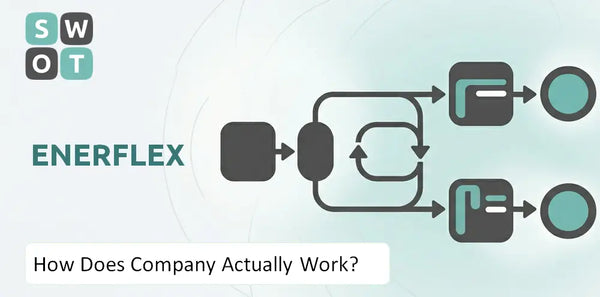
Enerflex pairs project sales with aftermarket contracts and rentals to convert one-time CAPEX into steady service revenue; this increases customer stickiness and improves free cash flow predictability.
See a product view in Enerflex SWOT Analysis
What Does Enerflex Actually Sell?
Enerflex Ltd. sells modular engineered systems, contract compression rentals (horsepower as a service), and after – market parts and maintenance for natural gas and power generation, plus turnkey solutions for data center power projects; customers gain faster deployment, lower capex, and ongoing uptime support.
 Core product lines: Engineered Systems, Energy Infrastructure, After – Market Services
Enerflex company sells custom modular compression and gas processing packages (including NGL removal and refrigeration systems), rental compression fleets that deliver horsepower as a service, and parts plus overhaul and field maintenance. It has added power generation solutions focused on U.S. data center projects.
Who it serves
Primary customers are upstream and midstream oil and gas operators, utilities, and large power consumers such as data center developers. Contracting clients range from independents to major energy companies seeking outsourced compression and modular EPC (engineering, procurement, construction) delivery.
Value delivered
Customers get faster site commissioning, modular systems that reduce on – site construction time, and flexible rental horsepower to avoid upfront equipment capex. After – market services and spare parts improve reliability and extend asset life, reducing unplanned downtime and operating cost.
Why customers choose Enerflex
Clients pick Enerflex services for proven modular engineering, a global rental compression fleet, and integrated aftermarket support that keeps systems online. Its turnkey execution (design to commissioning) and recent push into data center power generation broaden revenue streams and recurring service income; see Where Enerflex Company Is Going.
Enerflex SWOT Analysis
- Complete SWOT Breakdown
- Fully Customizable
- Editable in Excel & Word
- Professional Formatting
- Investor-Ready Format

How Does Enerflex Run Day to Day?
Enerflex Ltd. runs as a vertically integrated energy equipment and services provider: design and fabrication feed a rental and field service business, creating tight timing and cost control across project lifecycles. Day-to-day work ties three manufacturing sites, a 483,000 horsepower U.S. fleet, and global field workshops into a continuous delivery and maintenance loop.

Integrated Operating Model
Enerflex operations run engineering, fabrication, rental, and aftermarket services as one loop so equipment built in-house moves directly into rental fleets or client projects, reducing lead times and handoffs.
Product and Service Delivery Workflow
Projects start with Engineered Systems for front-end design and fabrication, then transfer to Energy Infrastructure for deployment and rental, while After-Market Services provides 24/7 field support and maintenance.
Manufacturing and Development Footprint
Fabrication occurs across three state-of-the-art manufacturing facilities that produce compression, refrigeration, and modular gas-processing equipment for rental fleets and turnkey projects.
Sales and Distribution Channels
Sales mix includes rentals, EPC (engineering, procurement, construction) contracts, and direct equipment sales through regional teams and project-based tenders; aftermarket services are sold via service agreements and on-call deployment.
Key Assets, Systems, and Partnerships
Key assets include a U.S. rental fleet of approximately 483,000 horsepower (Dec 31, 2025), three manufacturing sites, and eight Latin America workshops; partnerships span OEM suppliers and regional service partners.
Practical Efficiency Driver
The vertical integration-manufacture, rent, service-lowers capex timing and operating cost, while high fleet utilization (stable at 94% through late 2025) drives steady rental revenue and strong aftermarket demand.

Daily Operations Snapshot
Enerflex company runs day-to-day by moving engineered products from shop floor to field deployment and continuous service: fabrication teams, fleet operations, and 24/7 aftermarket crews coordinate to keep utilization high and projects on schedule.
- Vertical integration: design, fabricate, rent, service.
- Delivery: equipment built in-house is deployed to clients or added to rental fleet; EPC projects use the same resources.
- Support system: regional workshops (eight in Latin America), OEM suppliers, and service contracts sustain operations.
- Efficiency engine: 94% fleet utilization and a 483,000 horsepower U.S. fleet (Dec 31, 2025) minimize idle capital and maximize aftermarket revenue.
For more on commercial approach and go-to-market mechanics see How Enerflex Company Sells
Enerflex PESTLE Analysis
- Covers All 6 PESTLE Categories
- No Research Needed – Save Hours of Work
- Built by Experts, Trusted by Consultants
- Instant Download, Ready to Use
- 100% Editable, Fully Customizable

How Does Money Come In at Enerflex?
Money comes into Enerflex Ltd. through large engineered-systems sales and steady, annuity-like streams from rental contracts and after-market services; the model mixes lumpy project cash with recurring, high-margin service revenue for stability.
Engineered Systems: Project Sales and Backlog
Enerflex company earns major revenue selling custom gas compression and refrigeration turnkey solutions; the Engineered Systems backlog provided future visibility at $1.1 billion as of December 31, 2025, driving project billing over multi-quarter cycles.
Energy Infrastructure and Rentals
Enerflex operations include long-term rental contracts for compression and refrigeration units that generate recurring cash flow; early 2025 projections showed roughly $1.4 billion expected revenue over the remaining contract terms, anchoring steady top-line performance.
Pricing and Monetization Model
Pricing mixes one-time engineered system sales, multi-year rental fees, and usage/maintenance charges; contracts include upfront equipment sales, staged progress billings, and recurring rental or service fees tied to uptime and term length.
After-Market Services and Margin Mix
After-Market Services-parts sales, maintenance agreements, and service visits-deliver higher margins and recurring income; Energy Infrastructure plus After-Market Services are expected to contribute about 65% of gross margin before depreciation and amortization under the 2025 targets.
How Money Comes In at Enerflex
Enerflex turns engineering demand into revenue by pairing lumpy, high-value engineered-systems contracts with predictable rental streams and recurring after-market services, which together shift profit toward more stable, high-margin income.
- Engineered systems sales backed by a $1.1 billion backlog as of December 31, 2025
- Long-term rental contracts in Energy Infrastructure projected to yield ~$1.4 billion over remaining terms (early 2025 data)
- Monetization via one-time project sales, staged billing, rental fees, and service contracts
- Strongest driver: recurring rental and after-market services mix, targeted to supply ~65% of gross margin before D&A
For customer segments and service detail see Who Enerflex Company Serves which outlines where Enerflex operates and how to engage their turnkey solutions.
Enerflex SOAR Analysis
- Complete SOAR Analysis
- Effortlessly Communicate Your Business Strategy
- Investor-Ready Format
- 100% Editable and Customizable
- Clear and Structured Layout

What Makes Enerflex's Model Strong or Fragile?
Enerflex Ltd.'s model is strong due to vertical integration and strict balance-sheet discipline, capturing margin across manufacturing and rental fleets while exiting 2025 with a bank – adjusted net debt/EBITDA near 1.0x. Fragility stems from long lead times for third – party engines (110-120 weeks) and heavy exposure to regional gas production cycles such as the Permian, which cap near – term growth.
What Supports the Model
Vertical integration across manufacture, rental and services lets Enerflex company capture lifecycle margins and smooth revenue through aftermarket and rentals. High utilization in 2025 and a combined backlog of $2.4 billion underpin near – term revenue visibility.
Key Assets or Capabilities
Owns manufacturing plants, a sizeable rental fleet and engineering teams that deliver Enerflex operations from design to commissioning. Aftermarket maintenance and compression solutions provide recurring service revenue and improve customer retention.
Dependencies or Constraints
Relies on third – party engine and component suppliers with lead times stretched to 110-120 weeks, which constrains order fulfillment and revenue ramp. Business concentration in basins like the Permian ties Enerflex services to regional production cycles and commodity pricing.
How Durable the Model Looks
Structurally sound in 2026 because of high utilization, deleveraging and backlog, but growth is capped by supply – chain bottlenecks and the pace of the energy transition away from fossil fuels.
Model Strengths and Vulnerabilities
Enerflex business model works through integrated manufacturing, rental and aftermarket services, producing steady margins and recurring cash flow; however, it is weakened by supplier lead times and basin concentration risk.
- Vertical integration captures margin across the project lifecycle
- Rental fleet and aftermarket services drive recurring revenue and utilization
- Critical supplier lead times (110-120 weeks) limit growth and responsiveness
- Durability: resilient financially in 2025/2026 but exposed operationally to supply chains and regional production
Who Enerflex Company Competes With
Enerflex VRIO Analysis
- Covers VRIO Analysis in Details
- Structured for Consultants, Students, and Founders
- 100% Editable in Microsoft Word & Excel
- Instant Digital Download – Use Immediately
- Compatible with Mac & PC – Fully Unlocked

Related Blogs
- What Does Enerflex Company Stand For?
- How Did Enerflex Company Become What It Is Today?
- Who Owns Enerflex Company and Why Does It Matter?
- How Does Enerflex Company Sell Its Products and Services?
- Where Is Enerflex Company Going Next?
- Who Does Enerflex Company Serve?
- Who Does Enerflex Company Compete With?
Frequently Asked Questions
Enerflex sells modular engineered systems, contract compression rentals, and after-market parts and maintenance. It also provides turnkey power solutions for data center projects. The article explains that these offerings help customers get faster deployment, lower upfront capex, and ongoing uptime support.
Disclaimer
All information, articles, and product details provided on this website are for general informational and educational purposes only. We do not claim any ownership over, nor do we intend to infringe upon, any trademarks, copyrights, logos, brand names, or other intellectual property mentioned or depicted on this site. Such intellectual property remains the property of its respective owners, and any references here are made solely for identification or informational purposes, without implying any affiliation, endorsement, or partnership.
We make no representations or warranties, express or implied, regarding the accuracy, completeness, or suitability of any content or products presented. Nothing on this website should be construed as legal, tax, investment, financial, medical, or other professional advice. In addition, no part of this site - including articles or product references - constitutes a solicitation, recommendation, endorsement, advertisement, or offer to buy or sell any securities, franchises, or other financial instruments, particularly in jurisdictions where such activity would be unlawful.
All content is of a general nature and may not address the specific circumstances of any individual or entity. It is not a substitute for professional advice or services. Any actions you take based on the information provided here are strictly at your own risk. You accept full responsibility for any decisions or outcomes arising from your use of this website and agree to release us from any liability in connection with your use of, or reliance upon, the content or products found herein.