
How does Echo Global Logistics match shippers to truck capacity and earn its margin?
Echo Global Logistics brokers freight by matching shippers with carriers via its tech-enabled marketplace, capturing the spread between customer rates and carrier pay. In 2025 Echo reported capacity elasticity gains and improved yield per load, signaling digital brokerage traction.
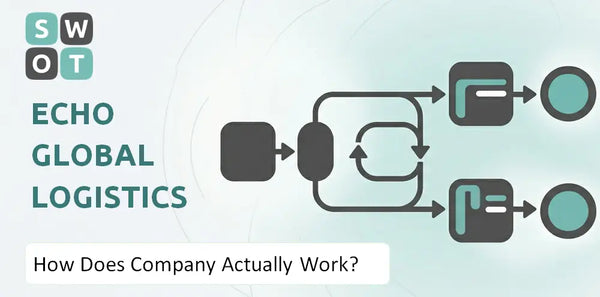
Echo scales via a carrier network, dynamic pricing, and automated load matching; its revenue hinges on transaction volume and margin per load. See product details: Echo Global Logistics SWOT Analysis
What Does Echo Global Logistics Actually Sell?
Echo Global Logistics sells logistics orchestration and capacity access, not trucks. It provides multi-modal transportation management-TL, LTL, intermodal-and asset-enabled services like drop-trailer and trailer pool programs to boost reliability and reduce detention.
 What Echo Global Logistics Offers
Echo Global Logistics offers a transportation management services suite: full truckload (FTL), less-than-truckload (LTL), intermodal, expedited, and brokered capacity through its Echo Global carrier network and Echo Global technology platform. Following the March 2026 close of ITS Logistics, it added asset-enabled, higher-margin solutions such as drop-trailer and trailer pool programs that reduce shippers detention and improve dock throughput.
Who It Serves
Echo Global Logistics serves shippers across manufacturing, retail, food & beverage, and third-party logistics firms needing flexible capacity and freight brokerage services. Clients range from regional businesses to national retailers that need scalable peak-season capacity and contracted trailer programs.
Value It Delivers
Customers gain simplified sourcing, vetted carriers, and execution under one platform so they avoid negotiating with thousands of trucking companies. Echo delivers improved on-time performance, lower detention, and faster tender-to-pickup cycles; post-ITS integration it also delivers higher-margin, asset-enabled reliability.
Why Customers Choose It
Customers pick Echo Global Logistics for its broad carrier network, technology-driven visibility, and mix of brokered and asset-enabled capacity that smooths volatility. Its Echo Global technology platform, carrier vetting, and API integrations with ERP systems make onboarding and shipment tracking efficient and hard to replace.
For context and strategy updates, see Where Echo Global Logistics Company Is Going
Echo Global Logistics SWOT Analysis
- Complete SWOT Breakdown
- Fully Customizable
- Editable in Excel & Word
- Professional Formatting
- Investor-Ready Format

How Does Echo Global Logistics Run Day to Day?
Echo Global Logistics runs day-to-day as an asset-light digital freight broker: shippers post loads via the Evolved Transportation Manager (ETM) or through account teams, AI matches loads to carriers from a >50,000-provider network, and Echo handles documentation, tracking, and settlement.

Operating model as a matchmaking engine
Echo Global Logistics operates a high-tech matchmaking engine: ETM ingests shipper requests, AI/ML analyzes real-time market and historical lane data, and the platform returns instant pricing and optimal carrier matches.
Product and service delivery via ETM and account teams
Shippers access Echo Global Logistics services through ETM, API integrations, or dedicated account reps; accepted bids convert into executed shipments with documentation, electronic BOLs, and real-time visibility for customers.
Carrier sourcing and development
Echo sources carriers from a vetted network of over 50,000 providers, maintaining performance records and onboarding standards; carrier selection prioritizes equipment type, location, safety scores, and past on-time metrics.
Sales channels and distribution mechanisms
Main channels are ETM platform, API/ERP integrations, and direct sales teams; shipments flow through digital tendering, automated carrier acceptance, and integrated tracking updates to shippers.
Key assets, systems, and partnerships
Key assets are ETM, AI/ML pricing engines, customer portal, API stack, and carrier relationships; partnerships include telematics providers and payment/settlement platforms for fast carrier payouts.
Why the model works day-to-day
The practical driver is data: real-time market signals + historical lane analytics let Echo provide instant, market-aligned pricing and match capacity quickly without owning trucks, keeping fixed costs low and scale high.

Daily operations and execution
Daily operations center on ETM-driven tendering: load posted, AI prices and selects a carrier from the Echo Global carrier network, operations team confirms paperwork, and tracking and billing workflows complete settlement.
- Core operating model: digital matchmaking engine using ETM plus AI/ML to price and allocate loads
- Service delivery: shippers use ETM, APIs, or account teams to access Echo Global Logistics services and tracking
- Main supporting system: ETM, integrated APIs, and a vetted carrier base of over 50,000 providers
- Efficiency driver: data-driven instant pricing and automated documentation reduce manual touchpoints and keep the model asset-light
For context on competitors and market positioning see Who Echo Global Logistics Company Competes With
Echo Global Logistics PESTLE Analysis
- Covers All 6 PESTLE Categories
- No Research Needed – Save Hours of Work
- Built by Experts, Trusted by Consultants
- Instant Download, Ready to Use
- 100% Editable, Fully Customizable

How Does Money Come In at Echo Global Logistics?
Echo Global Logistics earns money by charging shippers more than it pays carriers, capturing the spread as gross profit per load. In 2025, combined pro forma revenue including ITS Logistics was approximately $5.2 billion, driven by brokerage, managed transportation, and temperature-controlled warehousing.
Multi-modal brokerage: the volume engine
Multi-modal brokerage is the primary revenue stream, accounting for 74 percent of 2025 revenue; Echo Global Logistics buys capacity across truckload, LTL, intermodal, and parcel and resells to shippers at a markup.
Managed transportation and warehousing as stable income
Managed transportation provides long-term contracts and control-tower services, representing 19 percent of revenue, while temperature-controlled warehousing contributes 6 percent as a complementary offering.
Pricing and monetization model
Revenue is earned mostly via commission-style spreads per load and fixed-fee managed services; pricing mixes spot market buys with contract rates to balance margins and volume.
Primary revenue driver: scale and tech-enabled sourcing
Scale lets Echo Global Logistics buy capacity in bulk and use its technology platform and carrier network to find underpriced carriers, widening gross profit per load and stabilizing margins through managed transportation contracts.
How money comes in at Echo Global Logistics
Echo Global Logistics turns shipper demand into revenue by reselling transportation capacity at a markup, supplemented by recurring managed-transport contracts and warehousing fees; pro forma revenue with ITS totaled $5.2 billion in 2025.
- Multi-modal brokerage drives the bulk of revenue (74% of 2025)
- Managed transportation delivers recurring, contract-based income (19%)
- Monetization hinges on per-load spreads, service fees, and contract margins
- Scale, Echo Global technology platform, and Echo Global carrier network are the strongest revenue drivers
Further reading on sales motion and client capture is available in How Echo Global Logistics Company Sells
Echo Global Logistics SOAR Analysis
- Complete SOAR Analysis
- Effortlessly Communicate Your Business Strategy
- Investor-Ready Format
- 100% Editable and Customizable
- Clear and Structured Layout

What Makes Echo Global Logistics's Model Strong or Fragile?
Echo Global Logistics' model is strong because it is asset-light and tech-driven, letting it scale across freight modes while avoiding heavy ownership costs; it is fragile due to freight cyclicality, digital disintermediation, and elevated post – acquisition leverage. Key strengths are technology and drop – trailer services; key risks are rate transparency and near – term 6.8x pro forma 2025 leverage after the ITS Logistics deal.
Asset-light model and tech moat
Echo Global Logistics scales without owning trucks, lowering fixed costs and allowing rapid mode pivots across FTL and LTL. The Echo Global technology platform and API integrations improve quoting, routing, and carrier matching, raising gross margins when utilization is strong.
High – margin services from ITS integration
The 2026 integration of ITS Logistics adds drop – trailer and e – commerce/retail flows, which typically carry higher margins and recurring contracts. That diversification complements Echo Global Logistics services-FTL, LTL, and managed transportation-and expands the Echo Global carrier network.
Concentration on freight cycles and price discovery
Revenue and margins move with freight spot and contract rate cycles; when spot rates collapse, brokers like Echo lose leverage. Digital freight matching and direct shipper – carrier deals compress broker spreads and threaten volumes for Echo freight broker services.
Balance sheet and integration constraints
The $1.3 billion ITS Logistics acquisition increased debt; 2025 pro forma leverage estimated near 6.8x EBITDA raises refinancing and covenant risk if freight recovery stays soft. Successful integration execution is mandatory to realize synergies and protect cash flow.
Why Echo Global Logistics can win or be exposed
The model works when technology, an asset – light network, and higher – margin ITS services drive utilization and pricing power; it breaks when rate transparency and weak volumes hit spreads while high leverage limits flexibility. Monitor integration KPIs, debt metrics, and freight spot trends closely.
- Asset – light structure enables rapid scaling across FTL and LTL
- Echo Global technology platform and ITS drop – trailer services boost margins
- Dependence on freight rate cycles and risk from digital freight matching
- Model looks exposed in 2025/2026 due to 6.8x pro forma leverage but potentially durable if ITS integration raises recurring revenue
For background on ownership and corporate history, see Who Owns Echo Global Logistics Company
Echo Global Logistics VRIO Analysis
- Covers VRIO Analysis in Details
- Structured for Consultants, Students, and Founders
- 100% Editable in Microsoft Word & Excel
- Instant Digital Download – Use Immediately
- Compatible with Mac & PC – Fully Unlocked

Related Blogs
- What Does Echo Global Logistics Company Stand For?
- How Did Echo Global Logistics Company Become What It Is Today?
- Who Owns Echo Global Logistics Company and Why Does It Matter?
- How Does Echo Global Logistics Company Sell Its Products and Services?
- Where Is Echo Global Logistics Company Going Next?
- Who Does Echo Global Logistics Company Serve?
- Who Does Echo Global Logistics Company Compete With?
Frequently Asked Questions
Echo Global Logistics sells logistics orchestration and capacity access, not trucks. It provides transportation management services like full truckload, less-than-truckload, intermodal, expedited, and brokered capacity, plus asset-enabled options such as drop-trailer and trailer pool programs that improve reliability and reduce detention.
Disclaimer
All information, articles, and product details provided on this website are for general informational and educational purposes only. We do not claim any ownership over, nor do we intend to infringe upon, any trademarks, copyrights, logos, brand names, or other intellectual property mentioned or depicted on this site. Such intellectual property remains the property of its respective owners, and any references here are made solely for identification or informational purposes, without implying any affiliation, endorsement, or partnership.
We make no representations or warranties, express or implied, regarding the accuracy, completeness, or suitability of any content or products presented. Nothing on this website should be construed as legal, tax, investment, financial, medical, or other professional advice. In addition, no part of this site - including articles or product references - constitutes a solicitation, recommendation, endorsement, advertisement, or offer to buy or sell any securities, franchises, or other financial instruments, particularly in jurisdictions where such activity would be unlawful.
All content is of a general nature and may not address the specific circumstances of any individual or entity. It is not a substitute for professional advice or services. Any actions you take based on the information provided here are strictly at your own risk. You accept full responsibility for any decisions or outcomes arising from your use of this website and agree to release us from any liability in connection with your use of, or reliance upon, the content or products found herein.