
How does The Coca-Cola Company license brands and manage concentrate sales to drive profits?
The Coca-Cola Company earns most profits by selling concentrate, syrup, and trademarks to bottlers while keeping capital-light distribution. In 2025 it reported stronger concentrate margins and low single-digit organic revenue growth, signaling durable brand monetization.
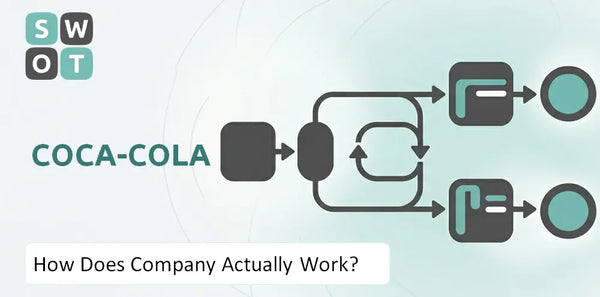
The Coca-Cola Company collects royalties, concentrates revenue, and supports bottlers with marketing and logistics, so cash returns from IP stay high. For a product-level view see Coca-Cola SWOT Analysis
What Does Coca-Cola Actually Sell?
The Coca-Cola Company sells concentrated syrups and beverage bases, not finished bottles; it licenses formulas and brands to bottling partners and provides chemical precursors, marketing, and supply-chain coordination to deliver a consistent beverage taste worldwide.
 Core Offerings: Concentrates, Brands, and Marketing
The Company's primary products are concentrated syrups and bases, flavor compounds, and intellectual property (secret formulas and trademarks). It also sells finished ready-to-drink products through bottlers, and provides global marketing, packaging specifications, and technical support to bottling partners.
Who It Serves: Bottlers, Retailers, and Consumers
Coca-Cola serves an international network of independent and company-owned bottlers, mass-market retailers, on-premise outlets (restaurants, cafes), and end consumers in more than 200 countries. Bottlers buy concentrate, produce finished beverages, and handle local distribution and retail execution.
Value Delivered: Brand Consistency and Scale
Customers gain a standardized beverage taste, strong global brand recognition, and access to marketing assets and category data. For bottlers and retailers this reduces product-development cost, shortens time-to-shelf, and leverages brand equity to drive sales.
Why Customers Choose Coca-Cola
Customers choose Coca-Cola for consistent flavor control, deep distribution networks, and powerful global marketing that supports local sales. The franchised bottling model concentrates capital-intensive production locally while Coca-Cola retains pricing power and margin from concentrate and syrup sales; by 2025 the Company held about 14 percent of the global non-alcoholic beverage market, reflecting this model's reach and monetization.
Key facts and mechanics: Coca-Cola's revenue streams center on concentrate and syrup sales, brand and trademark licensing, and finished-product sales through company-owned channels; bottling partners handle capital-intensive manufacturing and logistics, which is why How Coca-Cola franchising and bottling system work is central to How Coca-Cola works. See who Coca-Cola competes with for market context: Who Coca-Cola Company Competes With
Coca-Cola SWOT Analysis
- Complete SWOT Breakdown
- Fully Customizable
- Editable in Excel & Word
- Professional Formatting
- Investor-Ready Format

How Does Coca-Cola Run Day to Day?
The Coca-Cola Company runs day to day as an asset-light franchised system: the company owns the brand, global marketing, and concentrates while independent bottlers produce, package, and distribute finished beverages across retail and foodservice channels.

Operating Model: Brand Brain, Bottler Brawn
The Coca-Cola business model separates brand management and concentrate production from physical bottling and distribution. Corporate focuses on strategy, R&D, pricing, and global marketing while nearly 225 independent bottlers employ over 700,000 people to make and deliver drinks.
Product Delivery: Concentrate to Consumer
Bottlers buy concentrate and syrup from the Company, mix with carbonated water and sweeteners, bottle or can, and manage retail and foodservice delivery. This is how Coca-Cola turns concentrate into shelf-ready products worldwide.
Production and Sourcing: Centralized Formula, Local Manufacture
The Company manufactures concentrates and sources key ingredients; bottlers source local inputs like water, sweeteners, and packaging. Quality control and food safety protocols are enforced by corporate standards and local audits.
Sales Channels: Multi-Channel Distribution
Primary channels include supermarkets, convenience stores, restaurants, vending, and e-commerce. Bottlers run the last-mile logistics and trade execution; corporate supports pricing, trade margins, and global promotional campaigns.
Key Assets & Partnerships: Franchise Network and Digital Platforms
Core assets are the global brand, concentrate recipes, and bottler network; key partnerships include independent bottlers and large refranchising deals such as the pending sale of Coca-Cola Beverages Africa to Coca-Cola HBC closing in 2026. Investment in AI-powered marketing and digitized bottler sales platforms helps predict demand.
Why the Model Works: Scale with Low Capital Intensity
Refranchising shifts capital-intensive plants off the balance sheet, letting the Company scale brand and innovation globally while bottlers handle local execution. Digital demand forecasting and concentrated marketing deliver higher ROI on brand spend.

Day-to-Day Mechanics of Running Coca-Cola
Day to day, Coca-Cola manages concentrate production, global marketing, pricing strategies, and digital demand tools while bottlers produce, package, and distribute products-this division of labor enables fast market reach with limited capital exposure.
- The core operating model is an asset-light franchise where The Coca-Cola Company controls brand, concentrate, and strategy.
- Products are delivered by bottlers who mix concentrate with water and sweeteners, bottle or can, and run retail logistics.
- Main support systems include the bottling partner network, global marketing platforms, and AI-driven sales forecasting.
- The model is efficient because refranchising reduces capital burden and digital tools improve demand prediction and trade execution.
For background on ownership and corporate structure see Who Owns Coca-Cola Company
Coca-Cola PESTLE Analysis
- Covers All 6 PESTLE Categories
- No Research Needed – Save Hours of Work
- Built by Experts, Trusted by Consultants
- Instant Download, Ready to Use
- 100% Editable, Fully Customizable

How Does Money Come In at Coca-Cola?
Revenue at Coca-Cola Company comes mainly from selling concentrates and syrups to independent bottling partners, plus finished beverages sold directly in select markets; the monetization hinges on high-margin intellectual property rather than low-margin liquid sales.
Main revenue stream: concentrate and syrup sales
Coca-Cola works by licensing beverage formulas and selling concentrates and syrups to bottlers worldwide, which pay for the brand, recipes, and concentrates-high-margin inputs that drive most profit. This model separates manufacturing and distribution costs, so Coca-Cola Company earns margin on intellectual property and concentrate volumes.
Additional revenue streams: direct sales and consumer brands
In some markets Coca-Cola Company sells finished beverages directly to retailers and large accounts; it also earns licensing fees, syrup concentrate for fountain systems, and incremental income from brand partnerships and merchandising. These channels complement the core concentrate business and boost retail presence.
Pricing and monetization model: price/mix over volume
The company prices concentrates and finished goods to capture value via price/mix improvements rather than low-margin unit sales; in 2025 organic revenue rose 5 percent, driven by a 4 percent price/mix gain while global unit case volume was flat. Contracts with bottlers set syrup pricing, trade margins, and promotional responsibilities.
What drives revenue most: pricing power and brand scale
The strongest driver is brand-led pricing power and recurring demand across global channels; Coca-Cola Company avoids bottling and logistics costs, yielding higher comparable operating margin-31.2 percent in 2025-and steady cash flow from concentrate sales worldwide.
How Coca-Cola Company converts demand into revenue
Coca-Cola Company turns global brand demand into revenue primarily by selling concentrates and syrups to bottling partners and selectively selling finished beverages, capturing high-margin IP income while outsourcing capital-intensive bottling and distribution.
- Primary revenue stream: concentrate and syrup sales to bottlers
- Secondary monetization: direct finished-beverage sales, licensing, and fountain systems
- Pricing model: price/mix-led pricing with contract terms and trade margins
- Strongest driver: brand pricing power and scalable concentrate margins
For a strategic view of the Coca-Cola business model and where it's headed, see Where Coca-Cola Company Is Going.
Coca-Cola SOAR Analysis
- Complete SOAR Analysis
- Effortlessly Communicate Your Business Strategy
- Investor-Ready Format
- 100% Editable and Customizable
- Clear and Structured Layout

What Makes Coca-Cola's Model Strong or Fragile?
The Coca-Cola Company's model is strong because it is asset-light and scaled, delivering steady cash flow, yet fragile due to heavy reliance on bottling partners and sensitivity to macro and consumer-health trends.
Asset-light scale and cash generation
The primary strength is an asset-light franchised distribution model that outsources warehouses and trucks to bottlers, enabling high returns on assets and operational flexibility.
Brand, pricing power, and global reach
Strong global brand equity, extensive marketing, and broad retail presence let Coca-Cola set prices and extract trade margins across geographies, supporting recurring concentrate and syrup revenue streams.
Dependence on bottlers and execution
The model depends on independent bottling partners for distribution, quality control, and capex; poor bottler execution or capital constraints can directly hit sales and service levels.
Durability in 2025/2026: cautious but intact
Durable in 2025 with USD 5.3 billion non-GAAP free cash flow and projected comparable EPS growth of 7-8 percent, yet exposed by currency headwinds (a reported 5-9 point drag in late 2025) and shifting consumer demand toward healthier options.
Net assessment of resilience versus fragility
The Coca-Cola business model works because concentrate and syrup margins plus franchise distribution deliver predictable cash; it weakens if bottlers falter, currencies swing, or health trends erode volume faster than innovation and pricing can offset.
- Asset-light franchising provides high return on assets and steady cash
- Global brand, marketing, and pricing power drive concentrate and syrup revenue
- Reliant on bottling partners for distribution, logistics, and capex
- Model looks resilient in 2025 but exposed to currency and health-driven volume risks
For context on corporate purpose and positioning, see What Coca-Cola Company Stands For
Coca-Cola VRIO Analysis
- Covers VRIO Analysis in Details
- Structured for Consultants, Students, and Founders
- 100% Editable in Microsoft Word & Excel
- Instant Digital Download – Use Immediately
- Compatible with Mac & PC – Fully Unlocked

Related Blogs
- What Does Coca-Cola Company Stand For?
- How Did Coca-Cola Company Become What It Is Today?
- Who Owns Coca-Cola Company and Why Does It Matter?
- How Does Coca-Cola Company Sell Its Products and Services?
- Where Is Coca-Cola Company Going Next?
- Who Does Coca-Cola Company Serve?
- Who Does Coca-Cola Company Compete With?
Frequently Asked Questions
Coca-Cola sells concentrated syrups, beverage bases, flavor compounds, and brand intellectual property rather than only finished bottles. It also provides marketing, packaging specifications, and technical support to bottling partners, while some finished ready-to-drink products are sold through bottlers and company-owned channels.
Disclaimer
All information, articles, and product details provided on this website are for general informational and educational purposes only. We do not claim any ownership over, nor do we intend to infringe upon, any trademarks, copyrights, logos, brand names, or other intellectual property mentioned or depicted on this site. Such intellectual property remains the property of its respective owners, and any references here are made solely for identification or informational purposes, without implying any affiliation, endorsement, or partnership.
We make no representations or warranties, express or implied, regarding the accuracy, completeness, or suitability of any content or products presented. Nothing on this website should be construed as legal, tax, investment, financial, medical, or other professional advice. In addition, no part of this site - including articles or product references - constitutes a solicitation, recommendation, endorsement, advertisement, or offer to buy or sell any securities, franchises, or other financial instruments, particularly in jurisdictions where such activity would be unlawful.
All content is of a general nature and may not address the specific circumstances of any individual or entity. It is not a substitute for professional advice or services. Any actions you take based on the information provided here are strictly at your own risk. You accept full responsibility for any decisions or outcomes arising from your use of this website and agree to release us from any liability in connection with your use of, or reliance upon, the content or products found herein.